
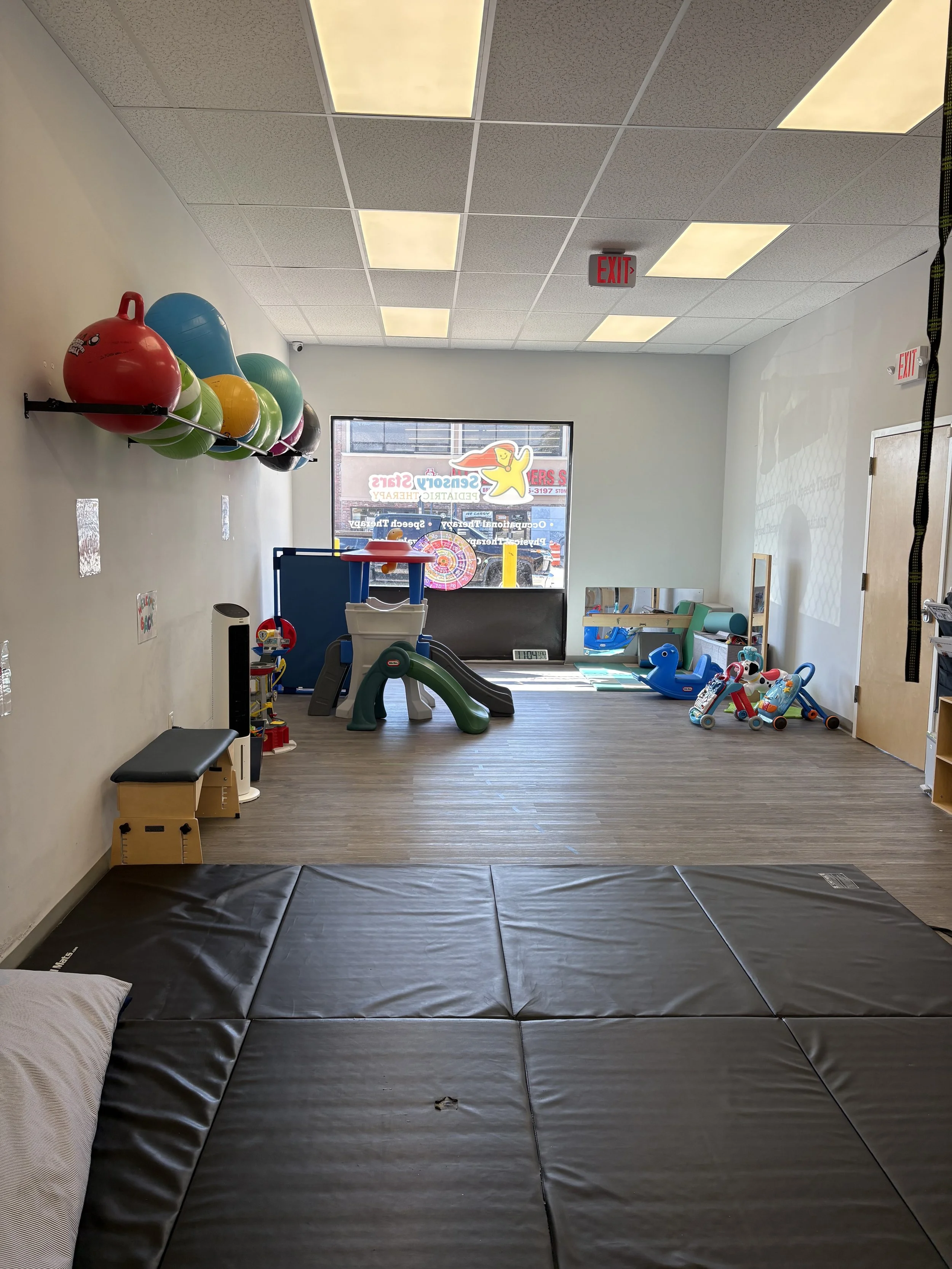
Sensory Stars Gym
Bright, spacious sensory gym with natural light from large windows and soft, neutral wall colors creating a calm, welcoming atmosphere. The room features a variety of therapeutic equipment arranged with clear pathways for safe movement: a large blue therapy mat and cushioned crash pit for gross motor play, a mounted swing with soft harness for vestibular input, and a series of foam shapes and balance beams for vestibular and proprioceptive activities. Shelving along one wall holds sensory toys, weighted blankets, therapy balls, and fine-motor tools neatly organized in labeled bins. A cozy corner with soft seating, a small tent, and low shelves of books offers a quiet, regulated space for breaks or one-on-one work. Visual supports and activity cue cards are visible on the walls, and adaptive seating options (bean bags and small chairs) are available for varied postural needs. Flooring is durable and cushioned to support falls and active play. Overall the gym presents a child-centered, professionally equipped environment designed to support motor planning
Sensory Gym 2
A bright, inviting sensory gym designed for children fills the image. The open room features soft, neutral walls and durable rubber flooring with colorful, non-slip mats defining activity zones. In the foreground, a low wooden climbing structure with gentle ramps and steps leads to a small platform and slide, surrounded by cushioned crash mats. To one side, a suspended platform swing hangs from a securely mounted ceiling beam, with a beanbag chair and sensory cushion nearby for calm, seated activities.
Along the far wall, shelves hold neatly organized sensory tools: therapy balls of various sizes, tactile toys, resistance bands, weighted lap pads, and visual trackers. A compact obstacle course—cones, tunnels, and stepping stones—winds through the center of the room, promoting balance and coordination. Mirrors are mounted at child-height on one wall, helping with body awareness exercises.
Soft lighting and a muted color palette create a calm atmosphere, while pops of bright primary colors on equipment add playfulness. A cozy corner with floor pillows, a small bookshelf, and visual schedules provides a quiet retreat for regulation or individualized therapy. Overall, the space balances safety, accessibility, and sensory-rich materials to support pediatric occupational, physical, and speech therapy activities.

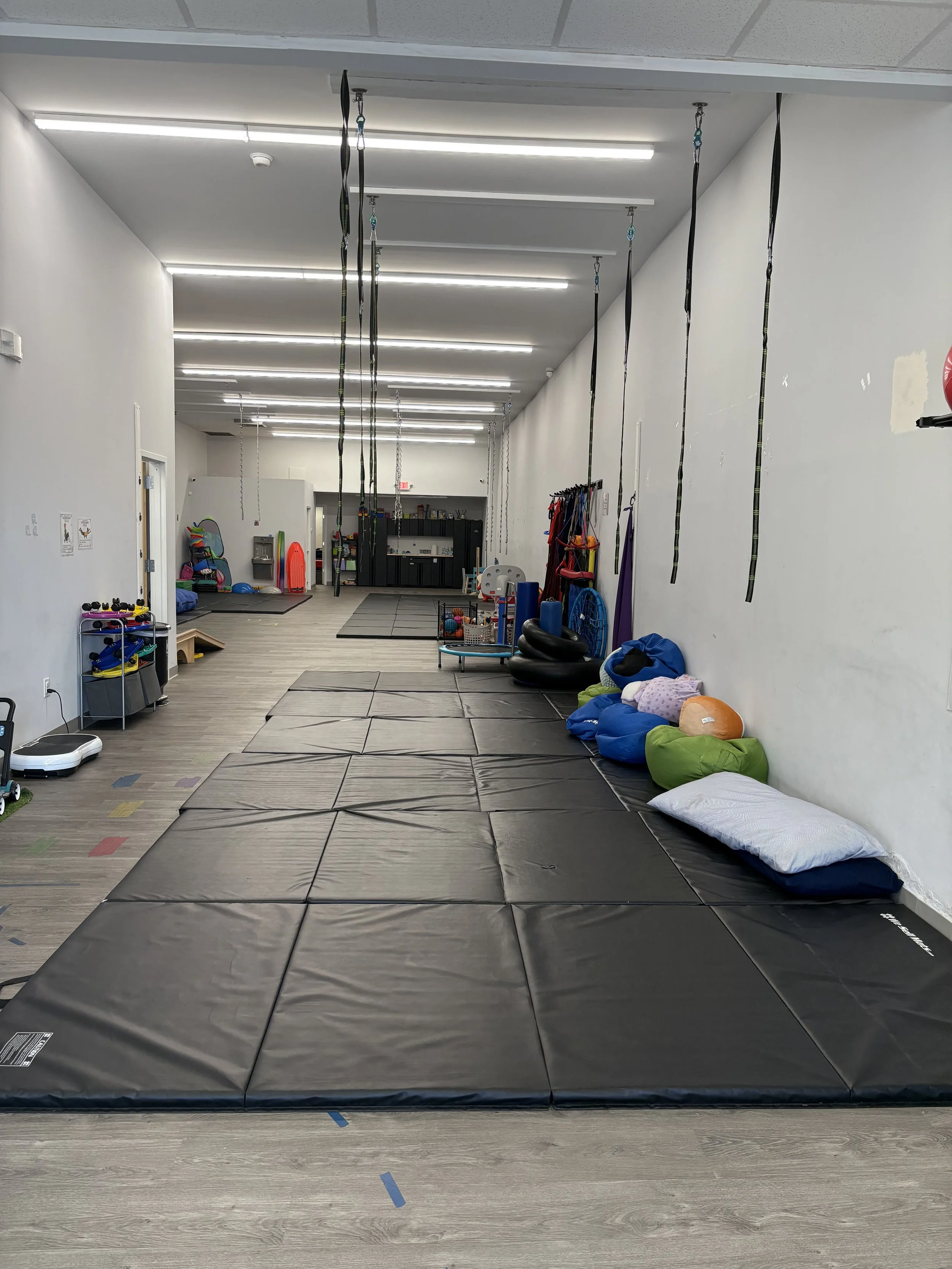
Treatment Area Hallway
A bright, open back treatment area designed for pediatric therapy and sensory play. The space features soft, neutral walls and durable wood-look flooring for easy cleaning and a warm feel. Along one side are low shelving units holding colorful bins of toys, therapy tools, and sensory materials, kept organized and accessible. A cozy reading nook with child-sized seating and soft cushions offers a quiet corner for one-on-one work or calm-down time.
In the center, a large padded mat provides a safe zone for gross motor activities, crawling, and floor-based exercises. Adjacent to it is a therapy table and adjustable chairs for fine motor tasks, feeding therapy, and caregiver consultations. Suspended from the ceiling is a sturdy swing frame with a therapeutic swing—perfect for vestibular input—plus a hammock-style seat for calming, weighted play.
Therapy equipment is thoughtfully arranged: foam wedges and ramps for climbing and positioning, balance beams and stepping stones for coordination, therapy balls and scooters for core strengthening and mobility, and an assortment of oral motor tools and adaptive equipment. Natural light fills the room through a bank of windows, supplemented by soft overhead lighting for a comforting atmosphere.
The space is intentionally uncluttered to reduce sensory overload, with clear pathways for movement and visual cues for activity zones. Wall-mounted charts and a small message board provide clinician notes and session planning, maintaining a professional yet child-friendly environment. Overall, the back treatment area balances functionality and comfort to support occupational, physical, and speech therapy needs for children of varying abilities.
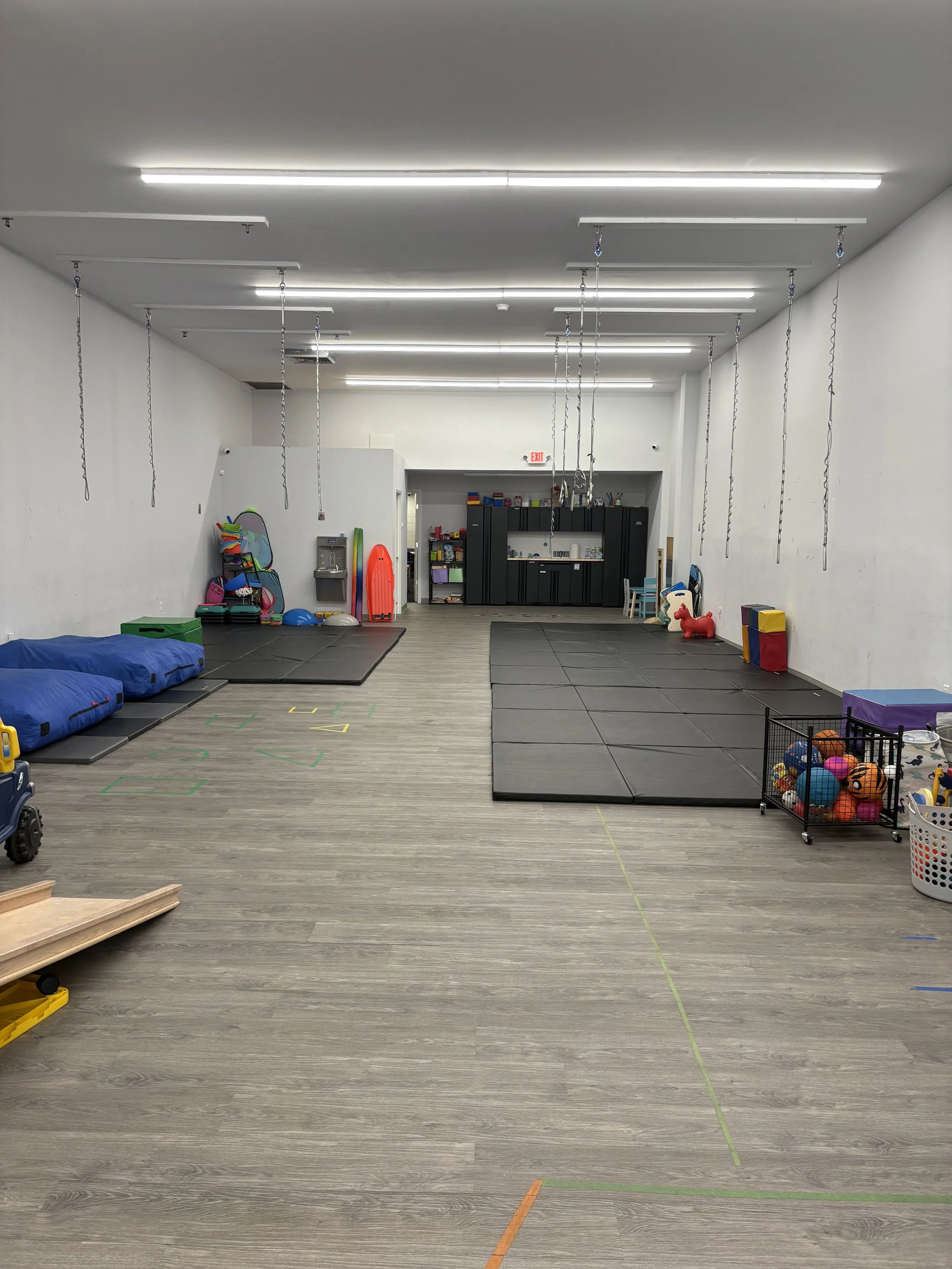
Gym Area
Open-concept sensory gym area designed for multi-sensory play and therapeutic programming. High ceilings and natural light create an open, calming atmosphere. Flooring is cushioned, non-slip, and color-zoned to define activity areas. Key features include:
Swing line with a variety of therapeutic swings (platform, linear, and hammock) for vestibular input and core strengthening.
Climbing wall and soft-play modular climbers for graded proprioceptive and motor planning challenges.
Trampoline station with safety padding and spotter handles to practice balance, rhythm, and coordination.
Obstacle course circuit with balance beams, stepping stones, tunnels, and resistance bands that can be rearranged for individualized goals.
Sensory corner with tactile panels, textured mats, hand fidgets, and a weighted lap pad for calming and tactile exploration.
Quiet nook with bean seating, dimmable lighting, and noise-reducing panels for regulation breaks and one-on-one sessions.
Fine motor table area stocked with manipulatives, puzzles, adaptive grips, and craft supplies to support hand strength, dexterity, and bilateral coordination.
Speech therapy station with visual supports, communication boards, and small-group seating to integrate language goals into play.
Therapy storage and sanitation zone with labeled bins, therapy tools, and easy-access cleaning supplies to maintain safety and organization.
Space layout supports simultaneous group and individual therapy, easy visual supervision by therapists, and flexible equipment arrangement to meet varied developmental and sensory needs.
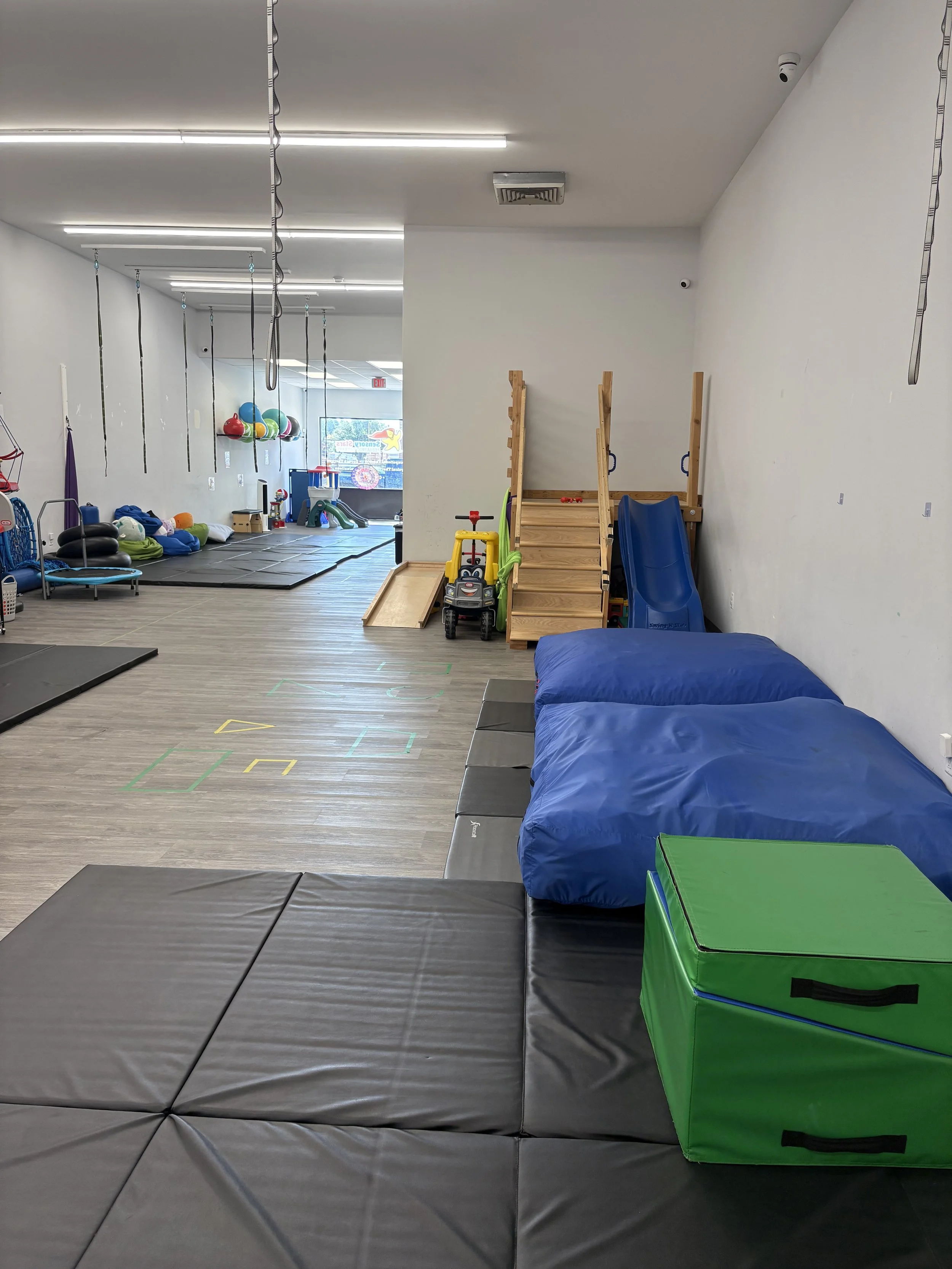
Gym Area
Crash & Climb Zone
A dynamic area designed for gross motor development, body awareness, and safe risk-taking. Soft crash mats, low climbing structures, wedge ramps, and foam obstacles allow children to practice jumping, rolling, climbing, and landing with confidence. Activities in this zone support balance, coordination, strength, and motor planning while encouraging sensory exploration and social interaction. Ideal for building confidence and movement skills in a controlled, supervised setting.

Sensory Room
Space Room
Our Space Room is a dedicated sensory calm-down space designed to help children regulate, relax, and reset. The room uses gentle lighting, soft textures, and soothing sounds to create a predictable, comforting environment where children can practice self-regulation skills with the support of our therapists and staff.
Features
Soft, dimmable star and galaxy lighting to provide a steady, calming visual focus.
Projection wall with slow-moving, high-contrast images that encourage visual tracking and attention without overstimulation.
Comfortable seating options: beanbags, cushioned mats, and a small reclining chair to accommodate different sensory preferences.
Tactile elements: weighted blankets, textured cushions, and a selection of hand-held sensory tools (fidget items, squeezable toys, and tactile balls).
Gentle auditory supports: options for white noise, nature sounds, or soft instrumental music at adjustable volumes.
Low-clutter design and neutral colors to reduce visual noise and create predictability.
Quiet retreat area with portable privacy screens for children who need a more secluded space.
Safety-conscious layout with soft edges and secure fixtures.
Who benefits
Children experiencing sensory overload, anxiety, or meltdowns.
Kids learning breathing, grounding, and self-regulation strategies.
Children who need a transitional space during sessions or between activities.
Families and caregivers who want a structured, therapist-guided calm-down routine to use at home.
How we use it
Guided calming sessions led by occupational, speech, or behavioral therapists tailored to each child’s sensory profile.
Short, independent breaks for children who have been taught self-regulation strategies.
Transition supports before or after group activities and therapy sessions.
Practice of coping skills such as deep breathing, progressive muscle relaxation, and visual focus techniques.
Safety and supervision
The Space Room is always staffed by trained Sensory Stars team members during use.
Materials and tools are age-appropriate, cleaned regularly, and chosen for safety.
Staff work with families to create individualized calm-down plans and to teach carryover strategies for home and school.
The Space Room offers a predictable, soothing environment where children can regain regulation, build coping skills, and feel supported. If you’d like to see the Space Room during a visit or discuss how it can be used for your child, our team will be happy to help.

Speech Room
Speech Treatment Room
Our Speech Treatment Room is a calm, focused space designed to support speech-language therapy for children of all ages and abilities. The room balances structured learning with sensory supports to help each child engage, communicate, and progress toward individualized goals.
Key features
Quiet, low-distraction environment to support attention and listening.
Child-sized table and chairs plus soft seating for flexible seating options.
Visual supports: picture schedules, vocabulary boards, and cue cards to support receptive and expressive language.
Mirrors for articulation practice and oral-motor awareness.
Age-appropriate toys, books, and games to create motivating, functional opportunities for language use.
Sensory supports: weighted lap pads, therapy swings (or access to nearby sensory gym), fidget tools, and adjustable lighting to help regulate attention and arousal.
Technology integration: tablet with evidence-based speech apps, AAC devices, and computer access when appropriate.
Materials for feeding/oral-motor therapy when indicated, including utensils and easy-to-clean surfaces.
Private observation window for caregiver education and involvement, plus space for family-centered coaching and collaborative goal planning.
Clinical approach
Individualized treatment plans based on standardized assessments and functional goals.
Multimodal teaching strategies: modeling, visual cues, tactile prompts, and repetition.
Play-based and naturalistic therapy activities to encourage spontaneous communication.
Collaboration with occupational and physical therapists to address sensory, motor, and feeding needs that impact speech and language.
Ongoing caregiver training to promote carryover of strategies at home and in the community.
Who benefits
Children with speech sound disorders (articulation, phonological disorders)
Children with language delays or disorders (receptive, expressive, pragmatic)
Children with fluency concerns (stuttering)
Children using or learning augmentative and alternative communication (AAC)
Children with oral-motor or feeding needs affecting speech
Children with autism spectrum disorder who need social communication supports
What to bring to your first session
Any recent reports from schools or other providers (IEP, evaluations).
A list of your child’s medical history and concerns.
Preferred toys or comfort item that helps your child engage.
For children using AAC, bring the device and any login information or access tools.
Our therapists provide compassionate, evidence-based care in a space designed to encourage communication growth, confidence, and functional success across daily routines. If you have specific concerns about your child’s speech, language, or feeding, we’ll tailor the room setup and therapy activities to meet their unique needs.

OT Room
Occupational Therapy Room
A well-designed occupational therapy (OT) room supports children’s independence, sensory regulation, motor planning, and functional skills through purposeful, play-based activities. For a pediatric practice like Sensory Stars, the OT room should be safe, flexible, and engaging—helping therapists address fine motor, gross motor, sensory processing, self-care, and handwriting goals.
Key zones and equipment
Entry/Reception Nook: small table or bench for transitions, coat hooks at child height, visual schedule or choice board to reduce anxiety and support routines.
Sensory Regulation Area: soft seating (beanbags, crash mats), weighted blankets or lap pads, calming lighting, noise-reducing panels, and a quiet corner with tactile toys and deep-pressure tools to help children organize arousal levels.
Gross Motor Zone: therapy swing (hammock or platform), climbing structure or ladder, obstacle course mats, mini-trampoline, balance beams, therapy balls, and push/pull toys to build strength, coordination, and motor planning.
Fine Motor & Exploration Table: adjustable-height table with small manipulatives, pegboards, puzzles, play dough, clothespin activities, lacing cards, and adaptive scissors to target hand strength, finger isolation, bilateral coordination, and in-hand manipulation.
Functional ADL Practice Area: realistic play kitchen or sink, shoe-tying board, dressing frames/buttons/zippers, toothbrush/toileting practice items, and a low mirror to practice self-care skills used at home and school.
Visual-Motor/Perceptual Corner: handwriting slant boards, dry-erase boards, pegboard activities, mazes, craft supplies, and games that target visual tracking, copying, spatial awareness, and fine visual-motor integration.
Therapy Technology & Adaptive Equipment: switch-adapted toys, tablet with therapy apps, orthotics storage, adaptive seating, and gait-training tools when needed.
Storage & Organization: labeled bins and clear containers at child height for independence, rolling carts for therapists, first-aid and cleaning supplies in a locked cabinet, and sensory bins rotated regularly to maintain novelty.
Environmental considerations
Safety: padded flooring or rugs, secure mounting for swings and climbing equipment, rounded furniture edges, outlet covers, and clear pathways for mobility devices.
Lighting: adjustable, non-glare lighting with options for dimming and natural light when possible. Use warm bulbs and avoid fluorescent flicker that can be overstimulating.
Acoustics: sound-absorbing panels, soft furnishings, and a designated